Introduction
Leading medical experts conclude that Whiplash is something that happens in a motor vehicle accident.
The history of whiplash dates back to the 1800’s when railway neck injuries were termed as “railway spine” as a result of railway accidents.
The term found its beginnings in 1930 by Crowe, an orthopaedic surgeon in California, He described the injury as something that occurred as a result of an automobile accident.
A double blinded survey has shown that the Upper Cervical Facet Joints are the most common cause of chronic neck pain and headaches following whiplash.
In 1999, British Journal of Orthopedic Medicine reported “ Chiropractic is the only proven effective treatment in chronic cases” of whiplash injury.
Chiropractic researchers are making significant advances in the area.
Each individual case must be considered on its own merits.
Functional Anatomy of the Cervical Spine
In order to appreciate the pathophysiology of whiplash injuries of the neck, a basic understanding of the biomechanics of the cervical spine is necessary. A brief review of the anatomical structures of the neck will help in the review of neck mechanics.
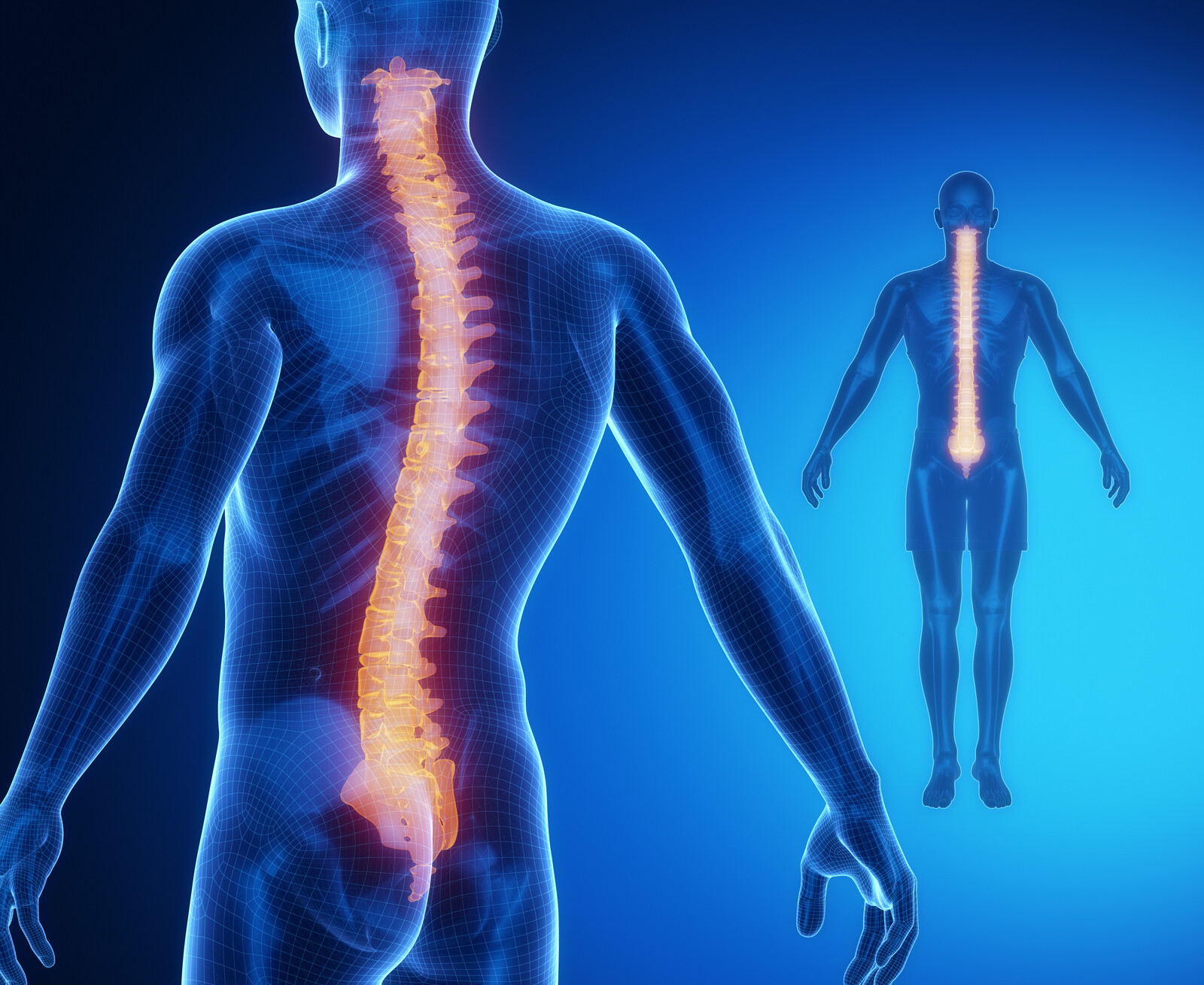
The Cervical Spine is made up of seven cervical vertebrae, numerous muscular and ligamentous holding elements. The intervertebral discs comprise 40% of the height of the cervical spine. This is the most mobile region of the spine. In addition the spine supports a weight of 5.5 kg on average. The weight of the skull adds momentum to the movement in the cervical spine. Therefore, it is the area of the spine most susceptible to the serious injuries from the whiplash-type, acceleration-deceleration injuries.
Each motion segment of the neck has approximately 20 degrees of flexion/extension movement, 14 degrees of side-to-side bending, and 10-15 degrees of facial rotation.
AMA Guides to the Evaluation of Permanent Impairment reports the following.
The movement of the cervical unit as a whole are 50 degrees of flexion, 60 degrees of extension, 45 degrees of lateral bending, and 80 degrees of rotation.
Pathomechanics of Whiplash
The whiplash injury mechanism consists of the hyperextension and tension of the cervical apparatus. This mechanism occurs in 3 phases.
Phase 1: The collision and speed variations of the struck vehicle determined by the impact conditions.
Phase 2: The interaction between the seat and occupants. The seat structure and content – seat foam and electricity of the seat back – influence the stress transfer from the seat to the occupant. The headrest also plays a role in the limiting of the amount of extension/ traction movement of the neck. The seat back pushes the trunk forward, while the head is left behind due to inertia, and moves backward until stopped by the motion range or by a head restraint.
Phase 3: In this phase the chest moves forward, followed by the the rotation of the head’s centre of gravity. The head continues to rotate forward, pulled by the neck, and then pushed by the headrest. The seat-belt locks the torso and transmits all of the kinetic energy to the unrestrained head via the cervical structures. The neck is subjected to the largest stress during this extension/traction phase.
In the milliseconds that follow impact, the contracting neck muscles produce a high degree of force in response to impending injury. Because the paravertebral muscles lie close to the centres of the rotation of the neck, the strong contraction causes a compressive force to be exerted through the spine. This limits the mobility of the facet joints and exerts pressure on the discs. Studies have implicated these compressive forces that are transmitted to the cervical spine to be a principal mechanism of injury to the head-neck complex.
It has been found that collisions with speeds as low as 10 km/hr can result in significant cervical spine injury. It has been estimated that the total kinetic energy transferred to the occupant would be approximately equal to twice the speed of the impact.

Whiplash Associated Disorders Symptomology
The clinical syndrome of whiplash is dominated by head, neck and upper thoracic pain, and often is associated with a variety of poorly explained symptoms such as dizziness, tinnitus and blurred vision. The symptom complex tends to be consistent from patient to patient. It may be frequently complicated by psychological sequelae such as anger, anxiety, depression and by concerns over litigation or compensation.
A delay in onset of symptoms of several hours following impact is characteristic of whiplash injuries. Most patients feel little or no pain for the first few minutes following injury, after which symptoms gradually intensify over the next few days. After several hours, limitation of neck motion, tightness, muscle spasm and /or swelling and tenderness of both anterior and posterior cervical structures become apparent. This delay is likely due to the time reared for traumatic edema and hemorrhage to occur in injured soft tissues.
Neck Pain
Patients with whiplash injuries invariably complain of achy discomfort in the posterior cervical region radiating out over the trapezius muscles and shoulders, down to the interscapular region, up into the occiput, and/or down the arms. This pain is often associated with burning and stiffness, with the latter typically being most apparent in the morning. Initially, there is markedly restricted range of motion of the cervical spine, which may be associated with palpable muscle spasm and localized paraspinal tenderness, range of motion is often restricted by pain, with extension more often limited than forward flexion.
Headaches
Headache is a common symptom following whiplash injury and the characteristic, clinical sequelae of a C2-3 facet joint injury. Within 24 hours of the accident, many patients complain of diffuse neck and head pain. Muscle contraction and vascular headaches often are present simultaneously. Patients may experience concomitant nausea, vomiting and photophobia.
Visual Disturbances, Dizziness and Tinnitus
Whiplash patients may complain of intermittent blurring of vision. Blurring of vision, by itself, is not believed to have diagnostic significance unless associated with damage to the cervical sympathetic trunk which is regarded as rare.
Tinnitus or difficulties with auditory acuity are frequently reported in association with whiplash injuries. Tinnitus may theoretically be due to vertebral artery insufficiency, injury to the cervical sympathetic chain, or inner ear damage.
Arm Pain and Parasthesiae
Arm pain and parasthesiae are frequently reported following whiplash injury. Historically, these symptoms have been attributed to cervical nerve root compression/ disc herniation.
However , modern imaging techniques have shown that disc herniations attributable to whiplash injuries are uncommon and of uncertain significance.
Arm pain has been attributed to thoracic outlet syndrome (TOC), with intermittent or transient compression of the brachial plexus.
Memory and Concentration Problems
Many patients with chronic whiplash pain complain of memory and concentration difficulties.
A number of researchers have argued that these difficulties are a consequence of a mild, traumatic brain injury, sustained as a consequence of a violent hyperflexion and hyperextension of the neck.
A review of human research finds little or no evidence of enduring brain injury after whiplash. There is also no conclusive evidence of neuropathological abnormalities after whiplash.
ICBC / Your Injury Benefits
Enhanced Accident Benefits are available to all B.C. residents injured in a crash, no matter who is responsible (at fault).
Enhanced Accident Benefits are here to support you in accessing all the medical and rehabilitation care available to you. And, if you’re unable to work due to an injury from a crash, you may have access to income replacement benefits.
These benefits are available to all British Columbians. Whether you’re a driver, passenger, pedestrian or cyclist, you’ll be covered if you’re injured in a crash. For a detailed look at the care and recovery benefits available, check out Your guide to Enhanced Accident Benefits

After a crash
Your ICBC claims representative will explain the benefits that are available to you based on information provided by you and your healthcare team. Treatment covered by Enhanced Accident Benefits must be for injuries directly related to the crash and must be necessary for your rehabilitation and recovery. ICBC staff will work with you, your doctor and your health care providers to help you access the services and recovery benefits you need.
Get approved treatment
You do not have to wait for a support and recovery specialist to contact you before getting treatment under Enhanced Accident Benefits. For the first 12 weeks after your crash, you can go for treatment with certain types of health care practitioners without the need for a doctor’s referral. Just make sure you have your ICBC claim number when getting treatment.
Learn more about getting treatment after a crash .
Medical care
Enhanced Accident Benefits are here to support you in accessing all the medical and rehabilitation care available to you. This could include:
- Treatments such as physiotherapy, chiropractic, and massage therapy
- Support and services such as occupational therapy, counselling, and dental care
- Medication and medical devices or equipment
- Travel and accommodation expenses when you need to travel for medical or rehabilitation appointments
Find out more about getting medical care after a crash.
ICBC may reimburse reasonable and necessary personal care expenses, such as home cleaning services, if you need assistance with the responsibilities of daily life. If you’ve been severely injured, ICBC may pay for reasonable and necessary changes to your home, such as a ramp, lift, or bathroom alterations.